

Location details
| Built | 1849 |
| Architects | William Tierney Clark |
| Architectural Style | Italian Neo-Renaissance |
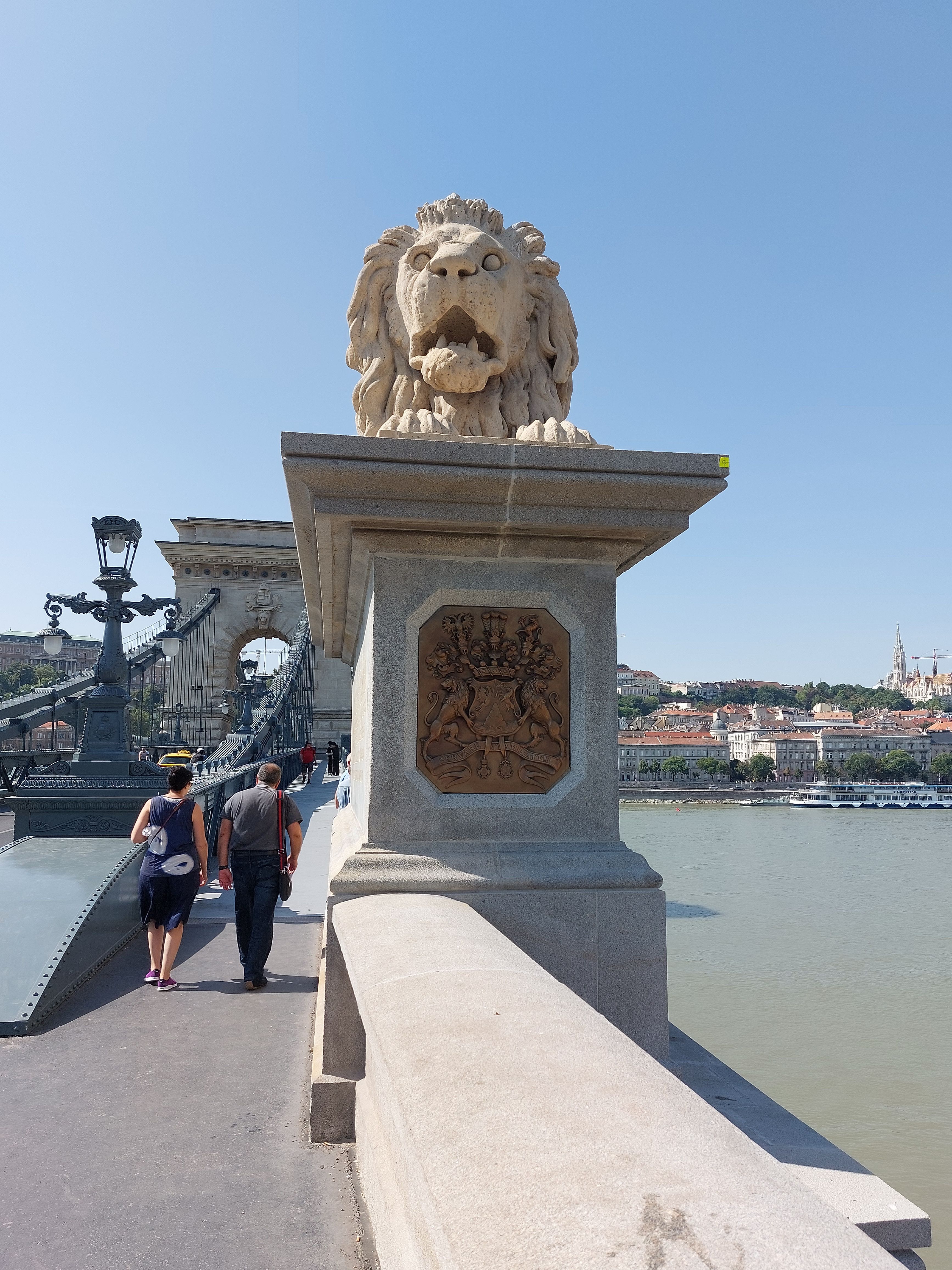
The Széchenyi Chain Bridge (1839–1849) was the first permanent bridge constructed in the Hungarian section of the Danube River. It connected the towns of Pest and Buda, which, along with Óbuda, were later unified to form Budapest in 1873. Surprisingly, it was a British Victorian creation. The initiator was the popular Hungarian aristocrat Count István Széchenyi, who found a designer in Britain. His name was William Tierney Clark, who also played a major role in leading the construction. Another leader was Adam Clark, but they were only namesakes: the former was English, the latter Scottish. Sixty-two skilled British labourers worked there during the 10 years of construction. Adam Clark did not return to Scotland after the work but married a Hungarian woman. Everyone, including noblemen, had to pay a toll to cross the bridge. Count Széchenyi arranged this in the Diet Parliament before construction. It was an important reform in feudalist Hungary toward equality of rights. It was the first Italian Neo-Renaissance-style building in Hungary. This style became fashionable in the country only from the 1860s. Nevertheless, the Italian Neo-Renaissance began in Clark’s Britain around 1837, which explains its early emergence in Hungary. Its two triumphal arches are about half the height of the neighbouring Buda Castle Hill, so the bridge fits its surroundings. The triumphal arch motif was later used in some other Budapest bridges. Although partly destroyed in World War II, it was rebuilt. This bridge and one in Marlow (England) are the only W. T. Clark bridges that remain today. Finally, a wrong legend: the guardian lions had no tongues, so their sculptor, János Marschalkó, was humiliated at the unveiling ceremony; thus he dove into the Danube and died. In fact, the sculptor died much later (in 1877), and no scandal happened at the inauguration ceremony. Moreover, the lions have tongues, but we cannot see them from pavement level; they can only be seen from a higher position.


Recommended by Metaport